A comparative evaluation of RRT-based replanning in changing environments, supported by controlled simulation and physical validation.
RRTRRT-ConnectRRT*RRTXFour planners under the same dynamic scenario
System developed
One framework for measuring how planners adapt.
The project placed four sampling-based planners inside a common discrete-time replanning loop. Each received the same start, goal, occupancy map, obstacle updates, and computational budget so differences in speed, path quality, clearance, and replanning burden could be compared fairly.
Evaluate adaptation, not just first-path generation.
The environment changed frame by frame. A previously valid route could become blocked, forcing each planner to continue growing, reset and replan, or repair its existing structure. The study measured both planning effectiveness and the cost of adaptation.
RRTExploratory baseline
RRT-ConnectBidirectional search
RRT*Path refinement
RRTXRepair-oriented replanning
02
Build a common loop
Give every planner the same representation and budget.
Both the physical and simulated systems reduced their environment to a 2D occupancy mask. The planner received a start state, goal state, map dimensions, and obstacle mask, then expanded its search structure for a fixed budget before the next update.
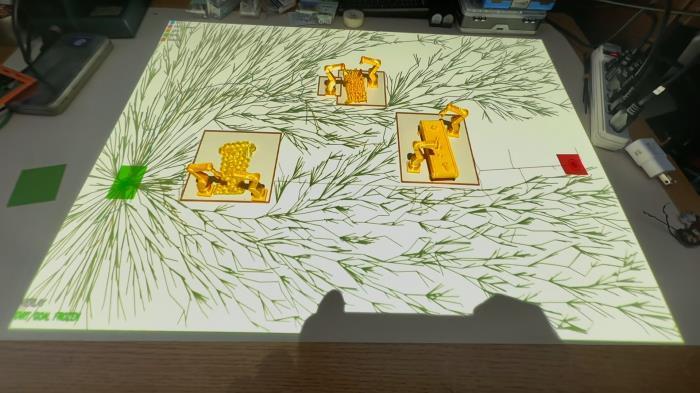
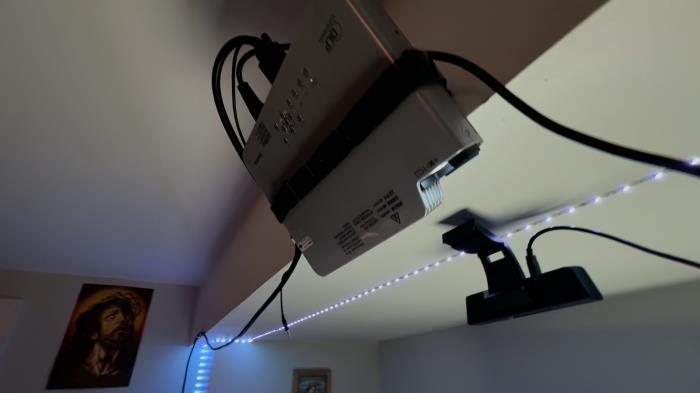
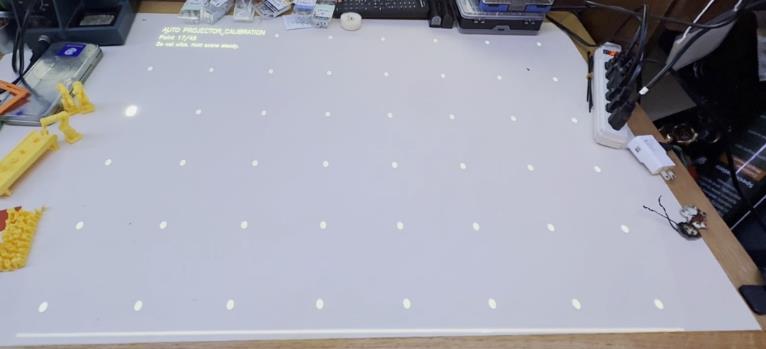
A top-down camera detected the start marker, goal marker, and warehouse-style obstacles using color-based segmentation. Camera-projector calibration mapped computed paths back onto the physical surface as a live overlay.
Control the environment for repeatable comparison.
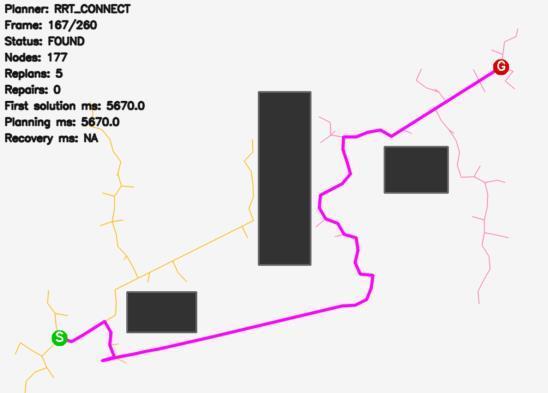
The benchmark used a 1000 × 700 workspace, three moving obstacles, 260 frames, and 120 planning steps per frame. Twenty random seeds produced averaged metrics while a synchronized four-panel view made the evolving search structures visible.
Fast solutions and short paths came from different planners.
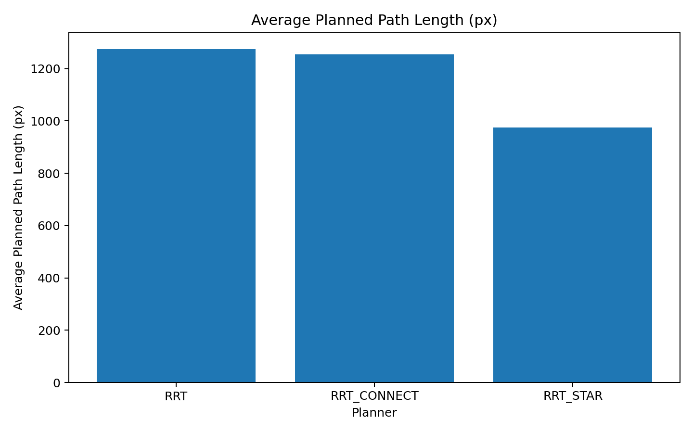
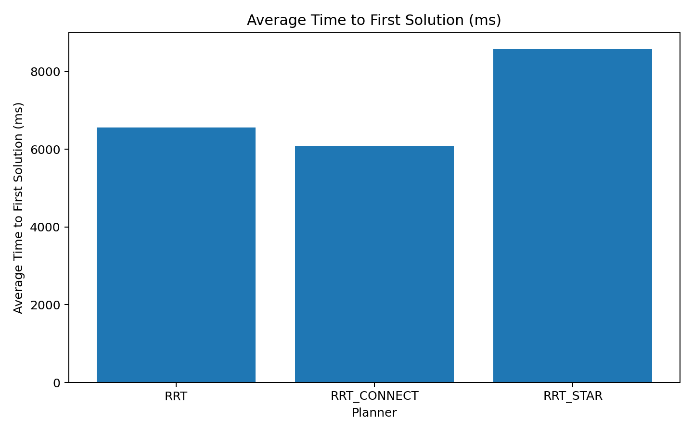
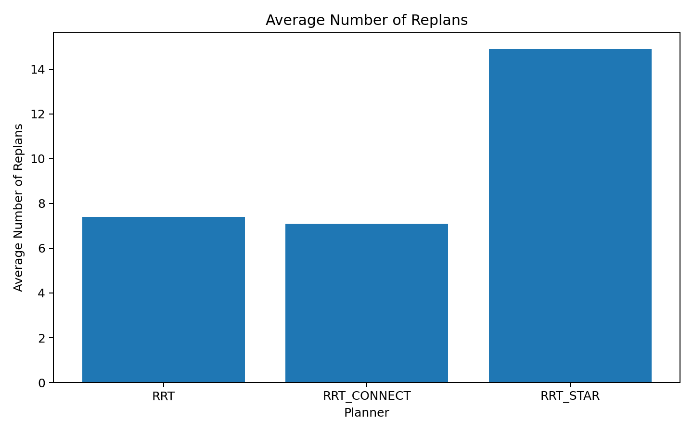
RRT, RRT-Connect, and RRT* each solved all 20 simulation seeds. RRT-Connect reached feasible solutions fastest. RRT* produced the shortest average paths, but required substantially more planning time and more replanning events.
6,095 msRRT-Connect average first solution
975 pxRRT* average path length
10.19 pxRRT average minimum clearance
06
Interpret the result
The best planner depends on the objective and environment.
RRT-Connect was strongest for rapid feasible replanning. RRT* was strongest when path refinement justified extra computation. RRT remained a reliable baseline with greater average clearance. RRTX highlighted how strongly repair-based behavior can depend on the way environmental change is represented.
4RRT-family planners
20simulation seeds
260dynamic frames
120planning steps per frame
Team
George Mikhaiel · Aaron Emmanuel · Muhammad Saad Farooq Hamirani · Sheik (Farhaan) Elaheebocus