CARDS: from unstable idea to demonstrated motion.
A modular delivery platform built as two self-balancing robots. SPADE demonstrated full mobility, vertical motion, recovery from the ground, and self-balancing. ACE demonstrated self-balancing as the collaborative latching platform.
- Design & mechanics
- Modular chassis, drivetrain, legs & latching
- Electrical & embedded
- Power distribution, sensing, motor control & CAN
- Control software
- Balance, motion, calibration & filtering
- Build & validation
- Fabrication, assembly, integration & testing
Engineering storyline
Six stages.
One integrated system.
The project moved from architecture and down-selection through fabrication, controls development, full-system integration, and a working demonstration.
Turn the delivery problem into buildable subsystems.
The team separated mobility, vertical motion, storage, latching, controls, and power. Early drivetrain concepts were compared for stability, efficiency, compactness, and serviceability.

Refine the drivetrain, legs, and chassis around real constraints.
Gearbox geometry, motor packaging, leg structure, and service access were iterated in CAD. Printed legs gave way to aluminum extrusion, while gearbox revisions improved manufacturability and packaging.
Translate CAD into parts that survive the bench.
Rapid-prototyped housings, machined fixtures, heat-set inserts, and modular extrusion assemblies enabled fast changes. Assembly exposed tolerance and access issues early enough to redesign them.
Build an electrical architecture around safe, predictable behavior.
My primary electrical work covered high- and low-voltage distribution, protection, monitoring, and the interfaces between Teensy controllers, ODrive motor drives, sensors, and the CAN network.

Separate motor and logic rails feed protected distribution, embedded control, sensing, and actuation.
Make the machine measurable, tunable, and stable.
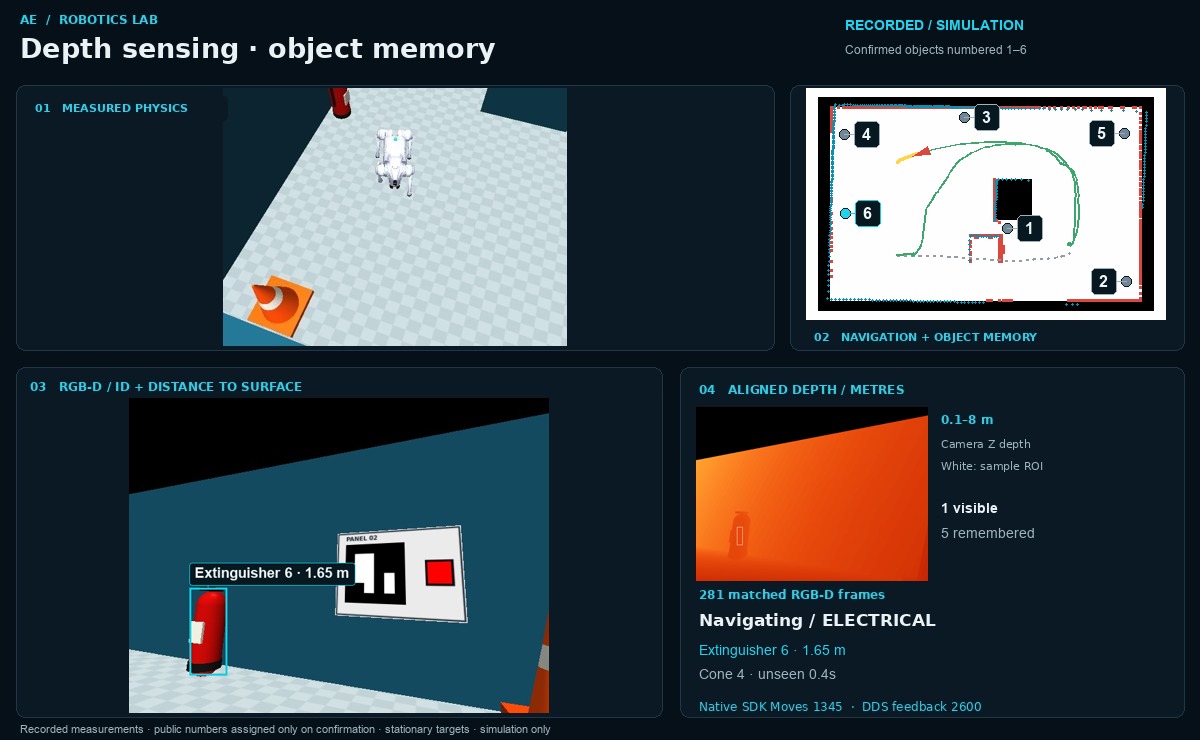
I worked on the cascaded balance and velocity loops, recalibration, low-pass filtering, and system tuning. Electrical load, current response, CAN timing, gearbox behavior, and disturbance recovery were validated at subsystem and robot level.

steady-state balance error
<10 msCAN bus latency
Two robots, two roles, one working platform.
SPADE was the fully mobile demonstrator; ACE balanced as the collaborative latching unit. The final result brought mechanical, electrical, embedded, and controls work together in live hardware.
System developed
A complete robotic platform, integrated across disciplines.
The final system combined custom hardware, embedded electronics, real-time control, and extensive physical testing.
- Two modular self-balancing robots with distinct collaborative roles.
- Custom drivetrain, gearbox, leg, chassis, and latching mechanisms.
- Protected power distribution and a networked embedded control architecture.
- Sensor-based balance and velocity control with real-time tuning.
- Full-system fabrication, assembly, integration, and validation.
Yaseen Rehman · Kavi Sreeskandavel · Yosihan Yogeswaran · George Mikhaiel · Aaron Emmanuel
Clearwater Structures Inc. · HobbyKing.com