01
Wearable architectureCapture finger shape and whole-hand motion.
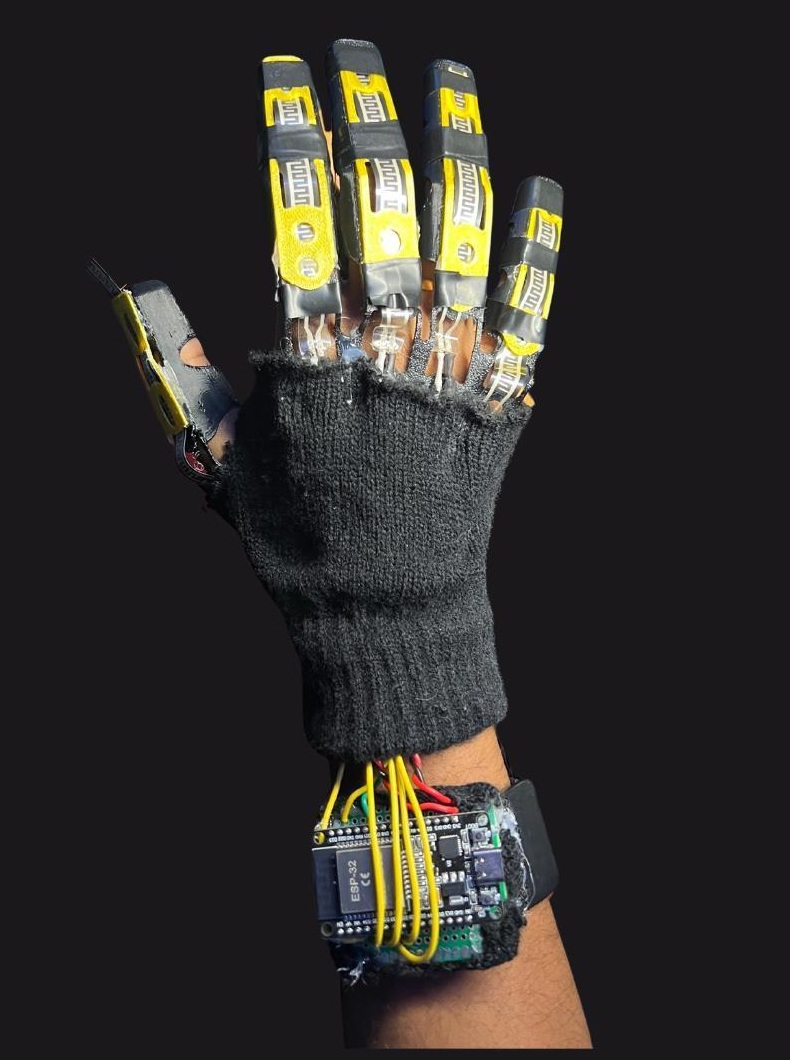
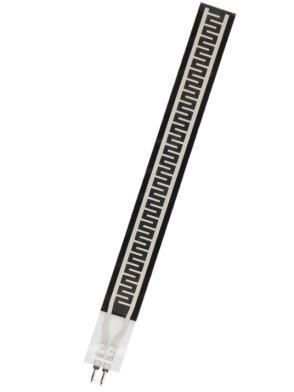
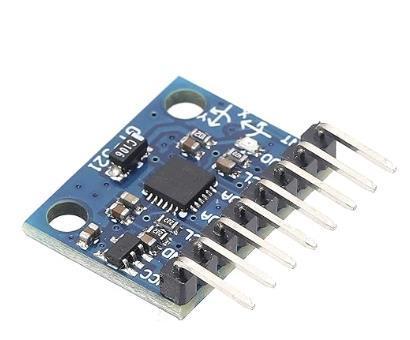
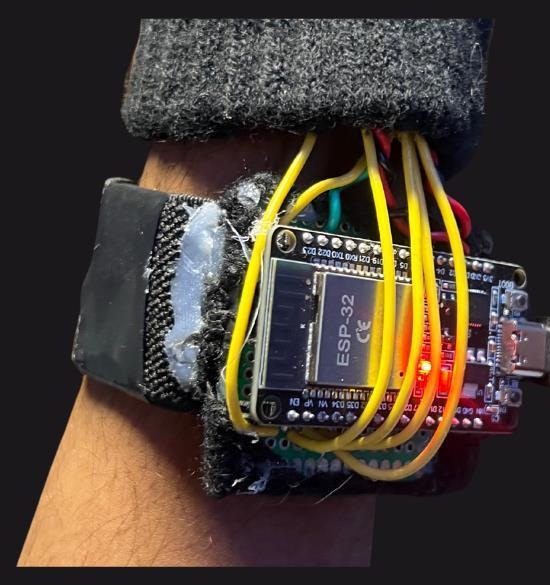
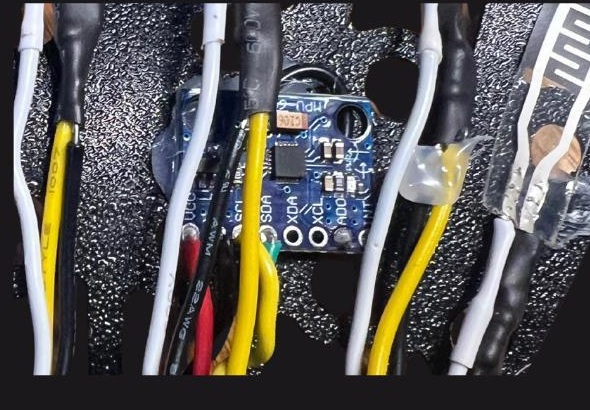
Five flex sensors measured individual finger bend while an MPU6050 captured orientation and movement. An ESP32 at the wrist sampled both sensing modes and prepared the signals for live transmission.
02
IntegrationPackage sensing and control into a wearable prototype.
The ESP32, inertial sensor, wiring, and finger sensors were integrated directly into the glove. Placement and strain relief mattered because the electrical system needed to remain stable through repeated hand movement.
03
Condition and calibrateTurn flexible hardware into repeatable data.
Exponential moving averages, a small dead band, fixed ADC settings, and IMU filtering reduced jitter. Per-finger rest and full-bend calibration adapted the glove to sensor and fit variation.
01Sample
→02Filter
→03Normalize
→04Fuse
04
RecognizeFuse eight features into one gesture representation.
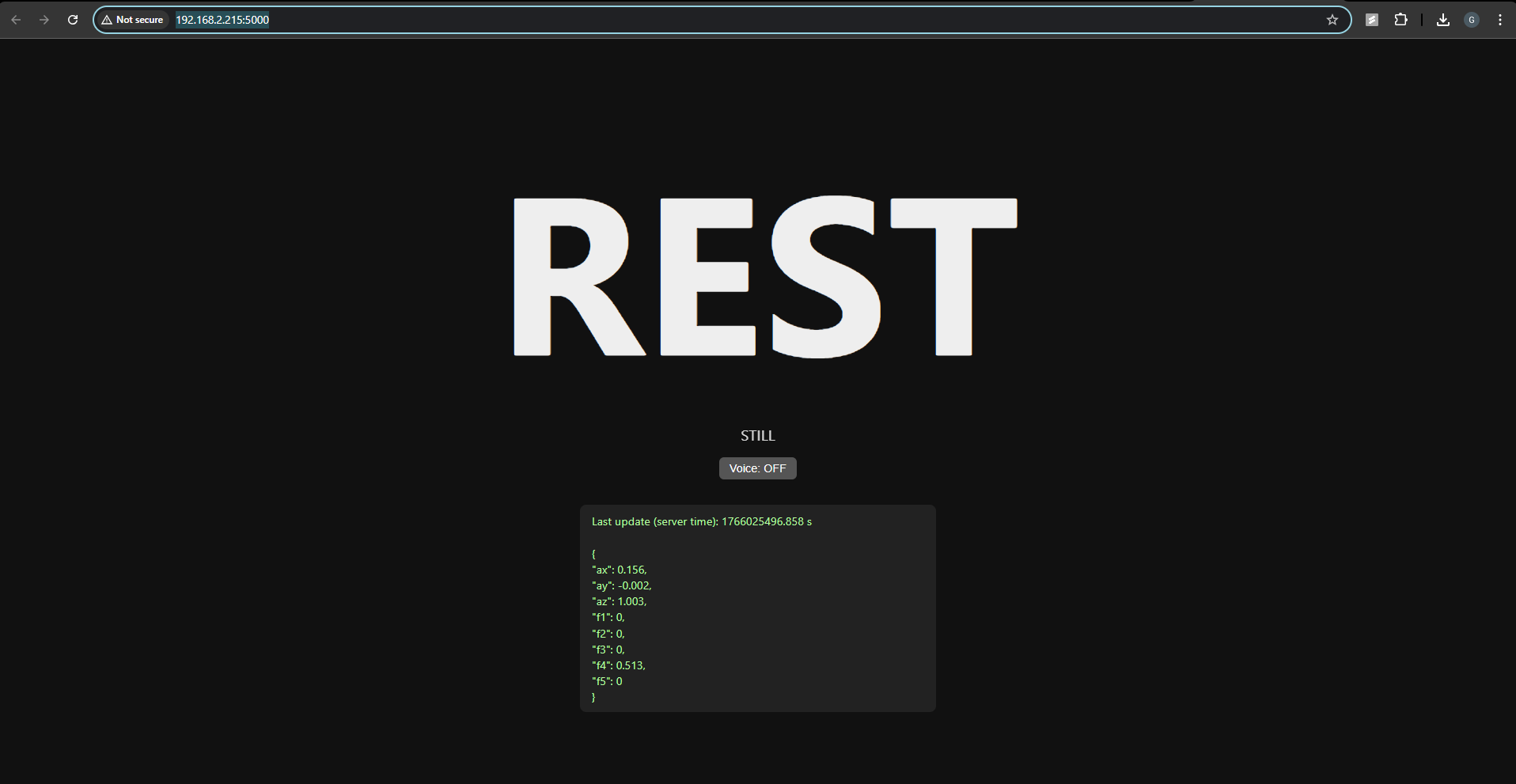
Five normalized bend values and three accelerometer axes formed an eight-feature vector. Python and scikit-learn were used to compare k-nearest neighbors, Random Forest, support vector machine, and multilayer perceptron models. kNN was selected for the live pipeline.
F1F2F3F4F5AXAYAZ
kNN selectedRandom ForestSVMMLP
05
CommunicateMake the recognized result available across devices.
The Python interface displayed each recognized letter and could speak it aloud. Any device on the same Wi-Fi network could open the shared live interface. The complete alphabet, including dynamic J and Z gestures, was included in the demonstration.